NYS Master Plumber Exam Prep

Master the New York State Plumbing Code & Pass Your Master Plumber Exam

Technical knowledge, code navigation skills, and business expertise to become a licensed Master Plumber — delivered in one focused course.

  • 16 exam-aligned course areas covering code, fuel gas, sizing, and business.
  • Taught at licensed Copiague, NY campuses.
  • Built for working plumbers ready for licensed Master status.

Get Course Details & Schedule

Tell us where you are — admissions will call you back within 1 business day.

No obligation. Your information stays with our admissions team.

6109 — Master Plumbers License Course • NYS Code

New York State Master Plumber Exam Preparation Course

This course is designed to prepare students for the New York State Master Plumber licensing examination by providing a comprehensive understanding of the New York State Residential Plumbing Code, fuel gas requirements, business operations, and the practical application of plumbing principles. Each topic builds the foundation needed to pass the licensing exam while preparing students to perform safely, legally, and professionally in the field.

Code Navigation

Find the right code section fast so you answer exam questions with confidence and accuracy.

Sizing Calculations

Size water, drainage, vent, gas, and storm systems using the methods the exam actually tests.

System Design

Design compliant residential and commercial systems from fixtures to final connection.

Compliance & Inspections

Prepare work that passes inspection and satisfies the Authority Having Jurisdiction.

Business Management

Estimate, contract, and run a licensed plumbing business the right way.

Fuel Gas Mastery

Apply NYS Fuel Gas Code rules for sizing, testing, venting, and safety.

Upcoming Dates & Course Details

6109 — Master Plumbers License Preparation Course — NYS Code

Total Hours: 60 Hours Total Cost: $1,740.00

Includes 2020 NYS Plumbing Code & NASCLA Contractors Guide.

Fall 2026 Session

  • Starts: 09/09/2026
  • Expected End: 11/25/2026
  • Mondays & Wednesdays, 6:00 PM – 9:00 PM

Winter 2027 Session

  • Starts: 02/01/2027
  • Expected End: 04/12/2027
  • Mondays & Wednesdays, 6:00 PM – 9:00 PM

Fall 2027 Session

  • Starts: 09/08/2027
  • Expected End: 11/17/2027
  • Mondays & Wednesdays, 6:00 PM – 9:00 PM
The Curriculum

16 Course Areas, Fully Aligned to the Exam

Hover any module to reveal the full breakdown of what it covers and why it matters for exam day.

01 Course Area 1: Scope and Administration training photo

1. Scope and Administration

AHJ, permits, inspections, and liability basics.

Why This Topic Matters

Every plumbing project begins with understanding who enforces the code, what projects require permits, who is legally allowed to perform plumbing work, and how inspections are conducted. Before installing a single pipe, a Master Plumber must understand the administrative requirements that govern every job.

Students will learn

  • Purpose and organization of the New York State Plumbing Code
  • Legal responsibilities of licensed plumbers
  • Permit requirements and exemptions
  • Inspection process and approvals
  • Occupancy classifications
  • Authority Having Jurisdiction (AHJ)
  • Code compliance responsibilities
  • Contractor liability and homeowner responsibilities

Master Exam Focus: Many exam questions test when permits, inspections, and code enforcement requirements apply.
02 Module 2: Definitions training photo

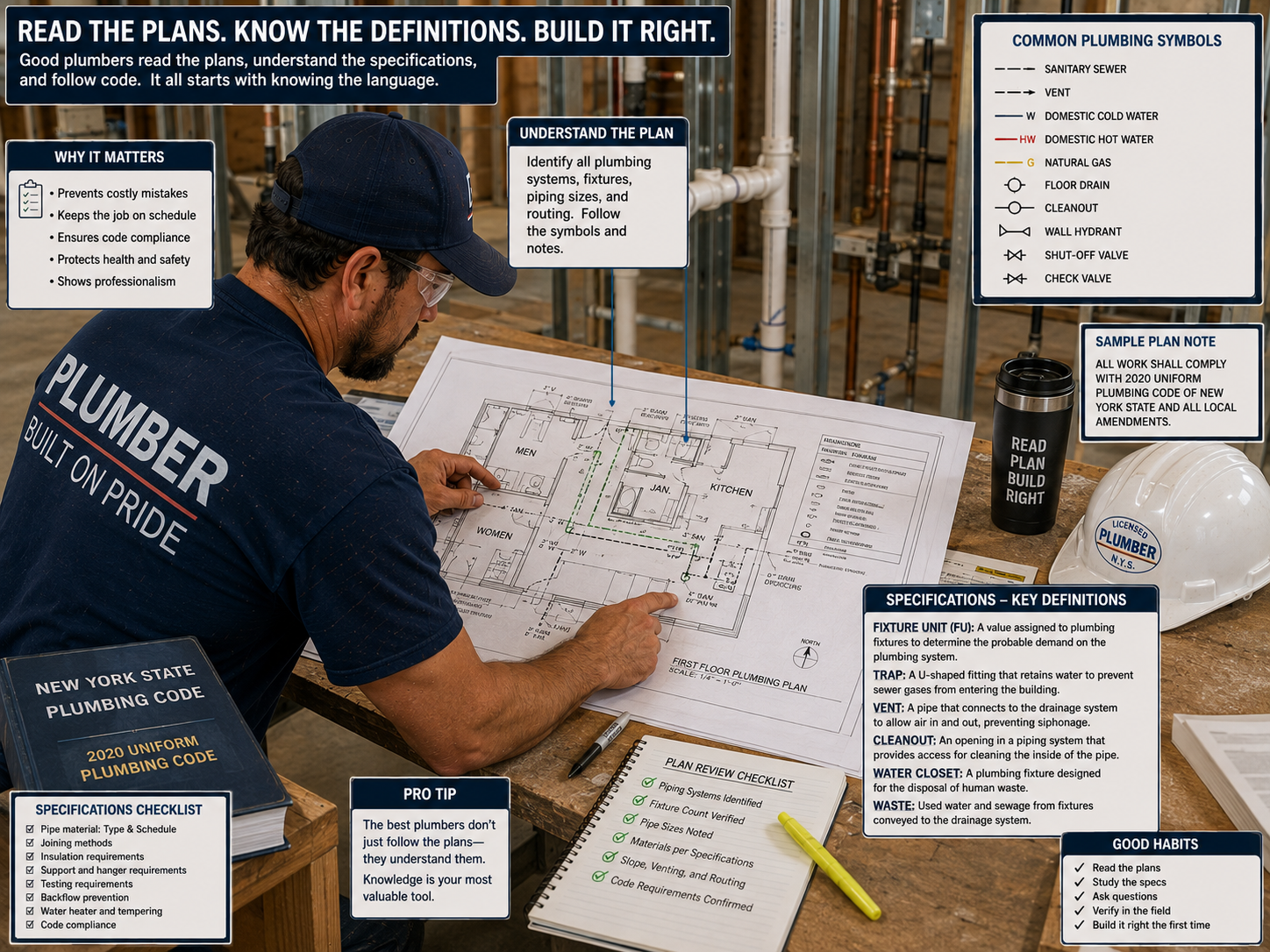
2. Definitions

Terminology, fixture units, sizing terms.

Why This Topic Matters

The plumbing code is written using technical language. A single word can completely change how a code section is interpreted. Master Plumbers must understand hundreds of plumbing definitions because every exam question references these terms.

Students will master

  • Plumbing terminology
  • Fixture unit definitions
  • Drainage terminology
  • Water distribution terminology
  • Gas piping terminology
  • Pipe sizing terminology
  • Safety terminology
  • Cross-reference definitions used throughout the code

Master Exam Focus: Understanding definitions allows students to correctly interpret every chapter of the plumbing code.

03 Module 3: General Regulations training photo

3. General Regulations

Testing, workmanship, protection.

Why This Topic Matters

General regulations establish the minimum standards for safe plumbing installations. These rules apply to nearly every plumbing system and form the foundation for code compliance.

Topics include

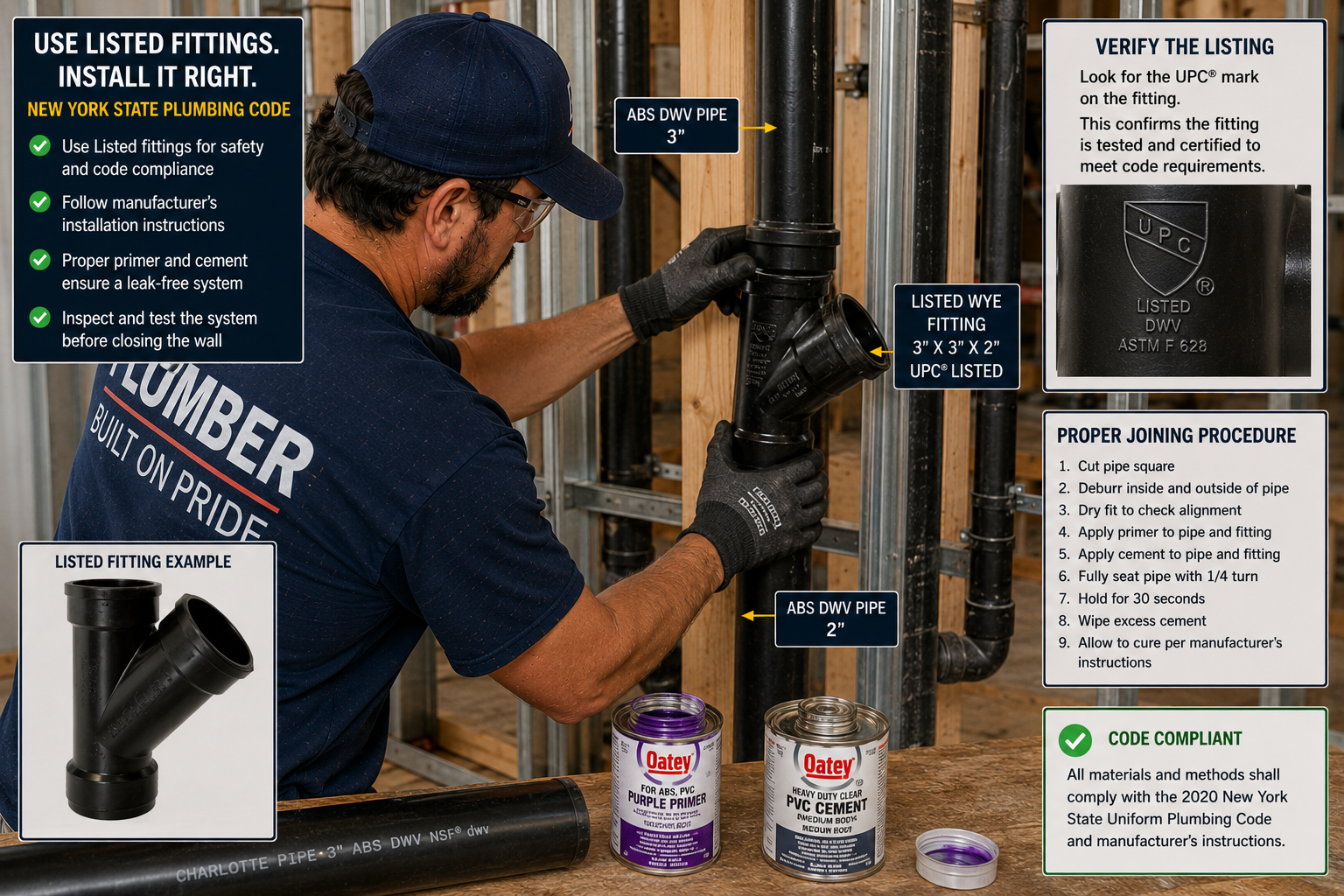
  • Approved materials
  • Workmanship standards
  • Installation practices
  • Accessibility requirements
  • Protection against contamination
  • Structural protection
  • Pipe protection
  • Fire stopping
  • Protection from freezing
  • System testing

Master Exam Focus: Students learn the ‘general rules’ that apply throughout the plumbing code before studying individual systems.

04 Module 4: Fixtures and Fittings training photo

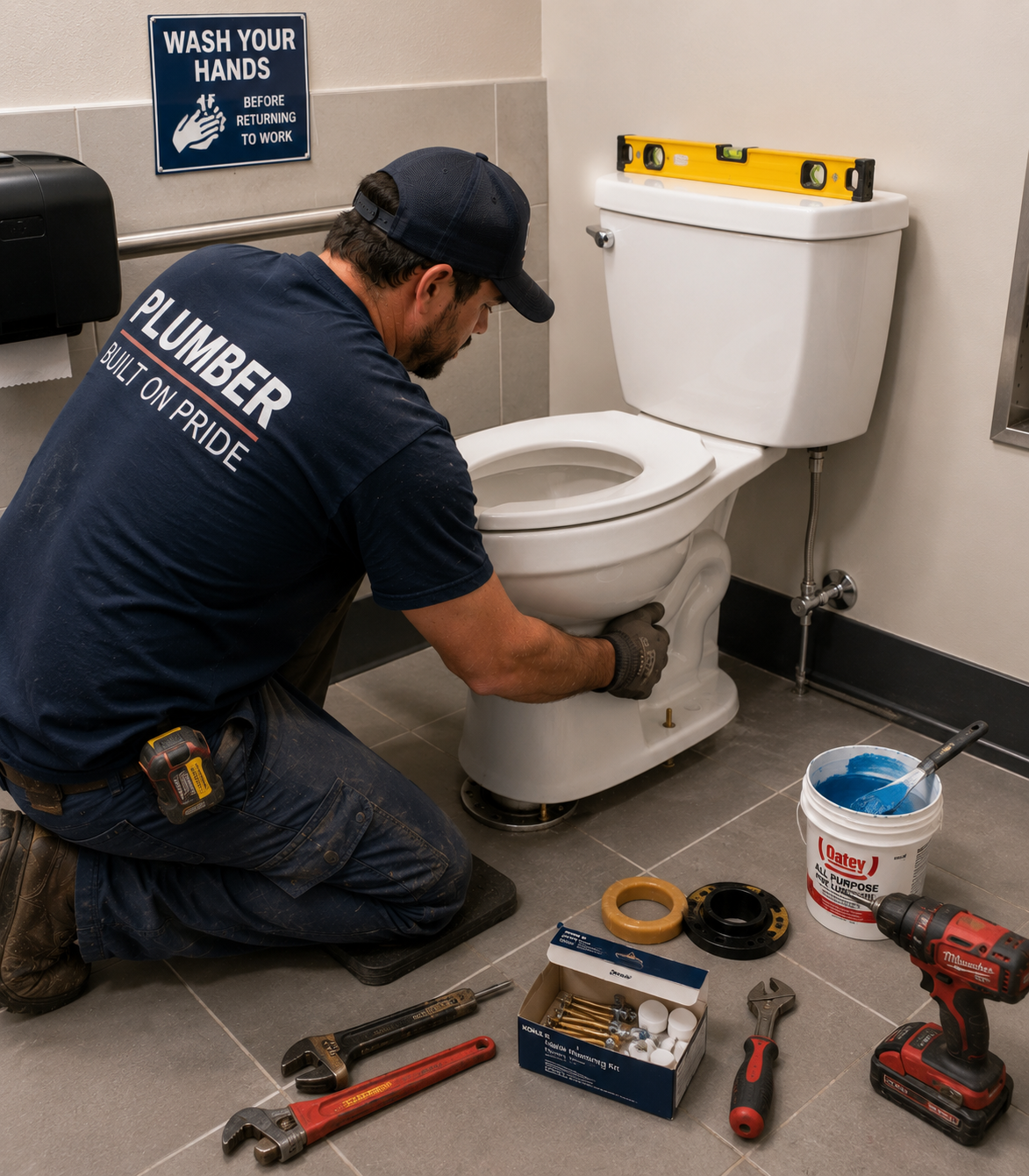
4. Fixtures, Faucets & Fixture Fittings

ADA, conservation, clearances.

Why This Topic Matters

Every plumbing system serves plumbing fixtures. Proper installation protects public health, conserves water, and ensures fixtures operate safely and efficiently.

Students will study

  • Toilets
  • Lavatories
  • Bathtubs
  • Showers
  • Kitchen sinks
  • Utility sinks
  • Drinking fountains
  • Bidets
  • Commercial fixtures
  • ADA fixture requirements
  • Water conservation standards
  • Fixture spacing
  • Fixture connections

Master Exam Focus: Fixture installation, clearances, water supply requirements, and code-compliant installations are heavily tested.

05 Module 5: Traps and Interceptors training photo

5. Traps, Interceptors & Separators

Trap seals and interceptors.

Why This Topic Matters

Trap systems prevent dangerous sewer gases from entering occupied spaces, while interceptors protect sewer systems from grease, oil, sand, and harmful contaminants.

Students learn

  • Trap design
  • Trap seal protection
  • Trap sizing
  • Trap arm requirements
  • Grease interceptors
  • Oil separators
  • Sand interceptors
  • Acid waste interceptors
  • Commercial applications
  • Maintenance requirements

Master Exam Focus: Trap sizing, venting requirements, and interceptor applications appear frequently on licensing exams.

06 Module 6: Special Systems training photo

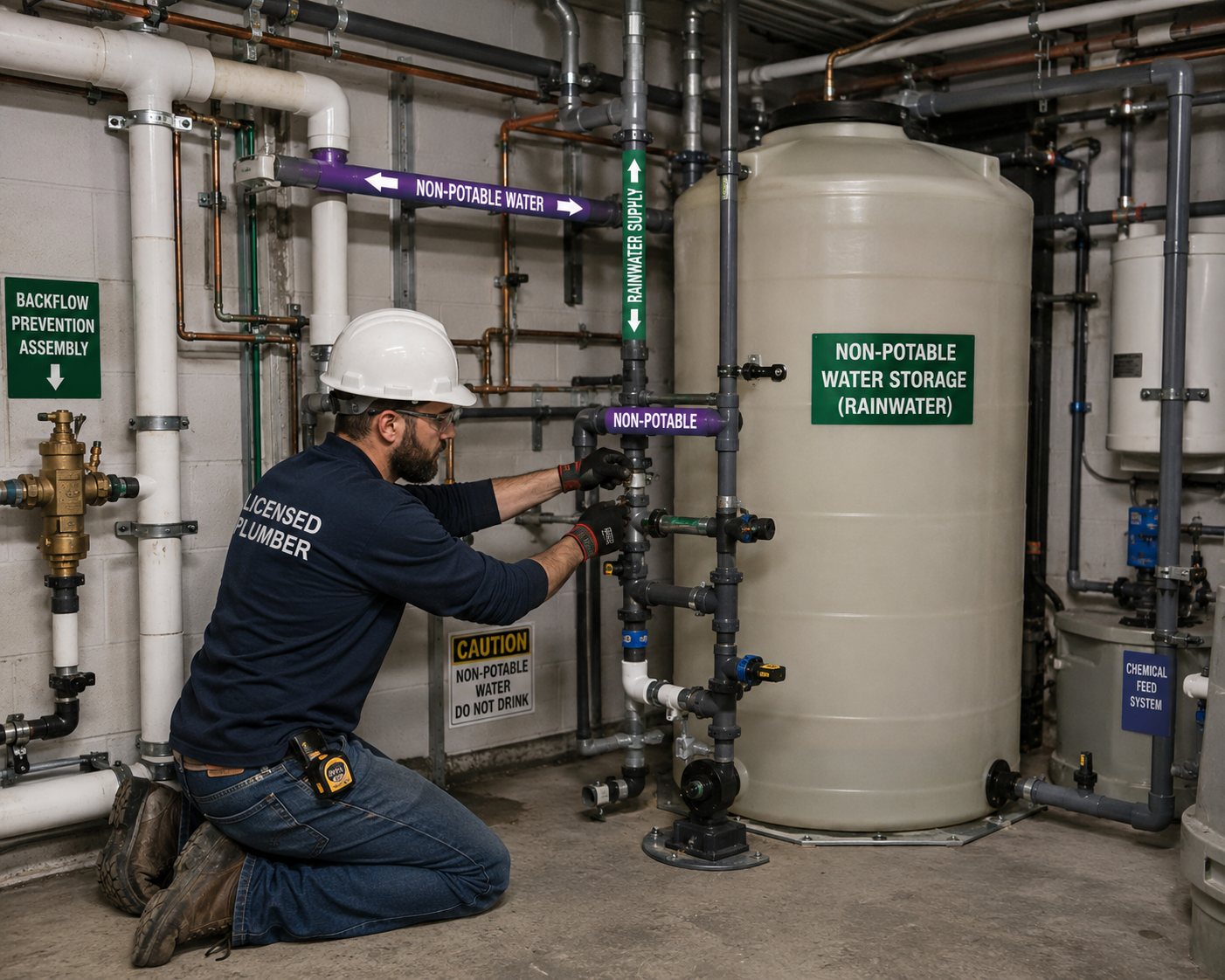
6. Special Piping & Storage Systems

Rainwater, gray water, medical gas.

Why This Topic Matters

Not every plumbing system is standard residential piping. Master Plumbers often work on specialized systems requiring additional code knowledge.

Topics include

  • Medical gas awareness
  • Rainwater harvesting
  • Gray water systems
  • Reclaimed water systems
  • Vacuum systems
  • Chemical waste piping
  • Compressed air systems
  • Storage tanks
  • Pressure vessels
  • Specialty piping applications

Master Exam Focus: Understanding when specialized systems require additional code provisions and safety measures.

07 Module 7: Landscape Irrigation training photo

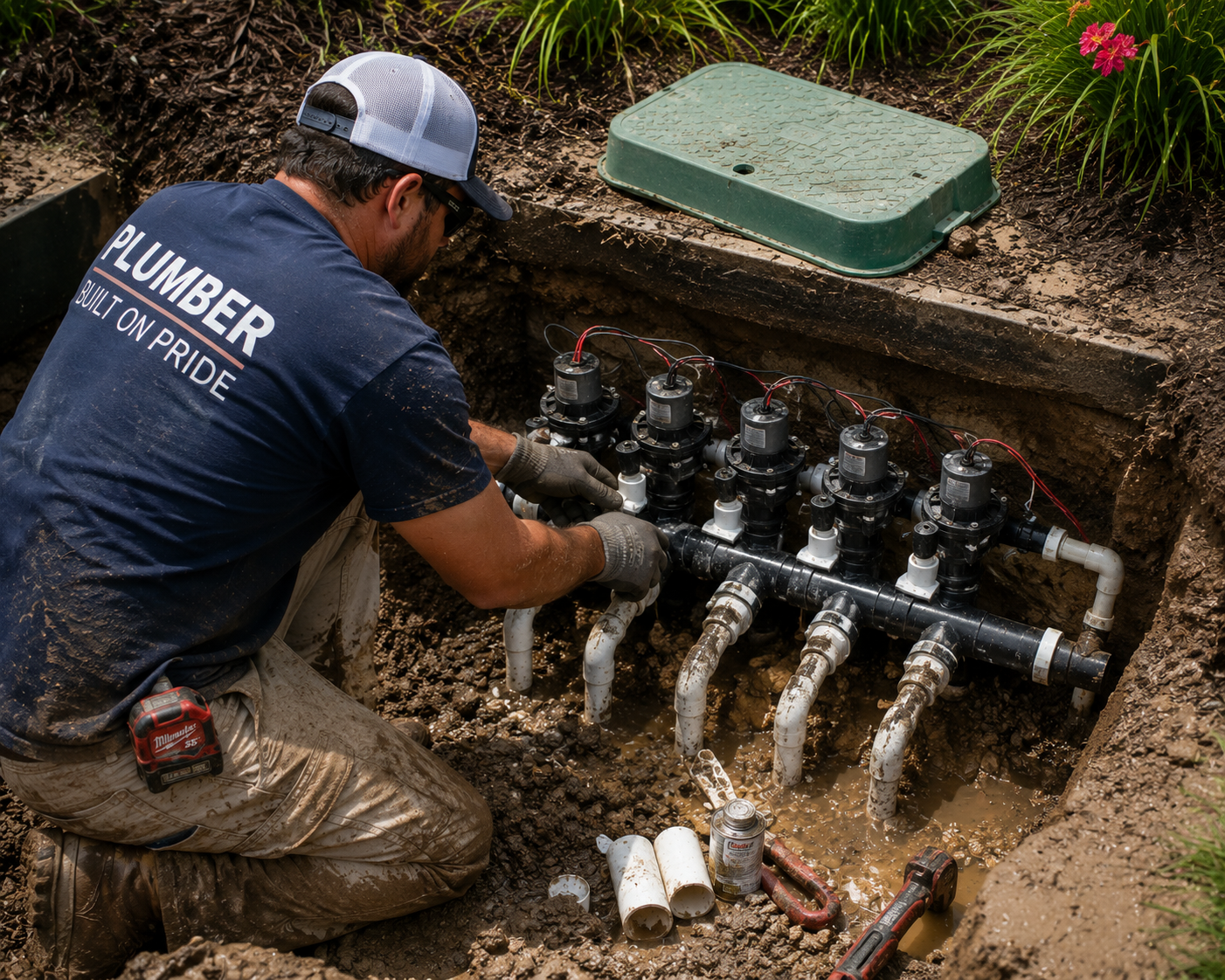
7. Subsurface Landscape Irrigation

Backflow, vacuum breakers, RP.

Why This Topic Matters

Improper irrigation systems can contaminate public drinking water through backflow. Master Plumbers are responsible for protecting potable water supplies.

Students study

  • Lawn irrigation systems
  • Underground sprinkler piping
  • Backflow prevention
  • Vacuum breakers
  • Reduced pressure devices
  • Cross connection control
  • Irrigation piping materials
  • Seasonal maintenance
  • Freeze protection

Master Exam Focus: Water contamination prevention and cross-connection control are common exam topics.

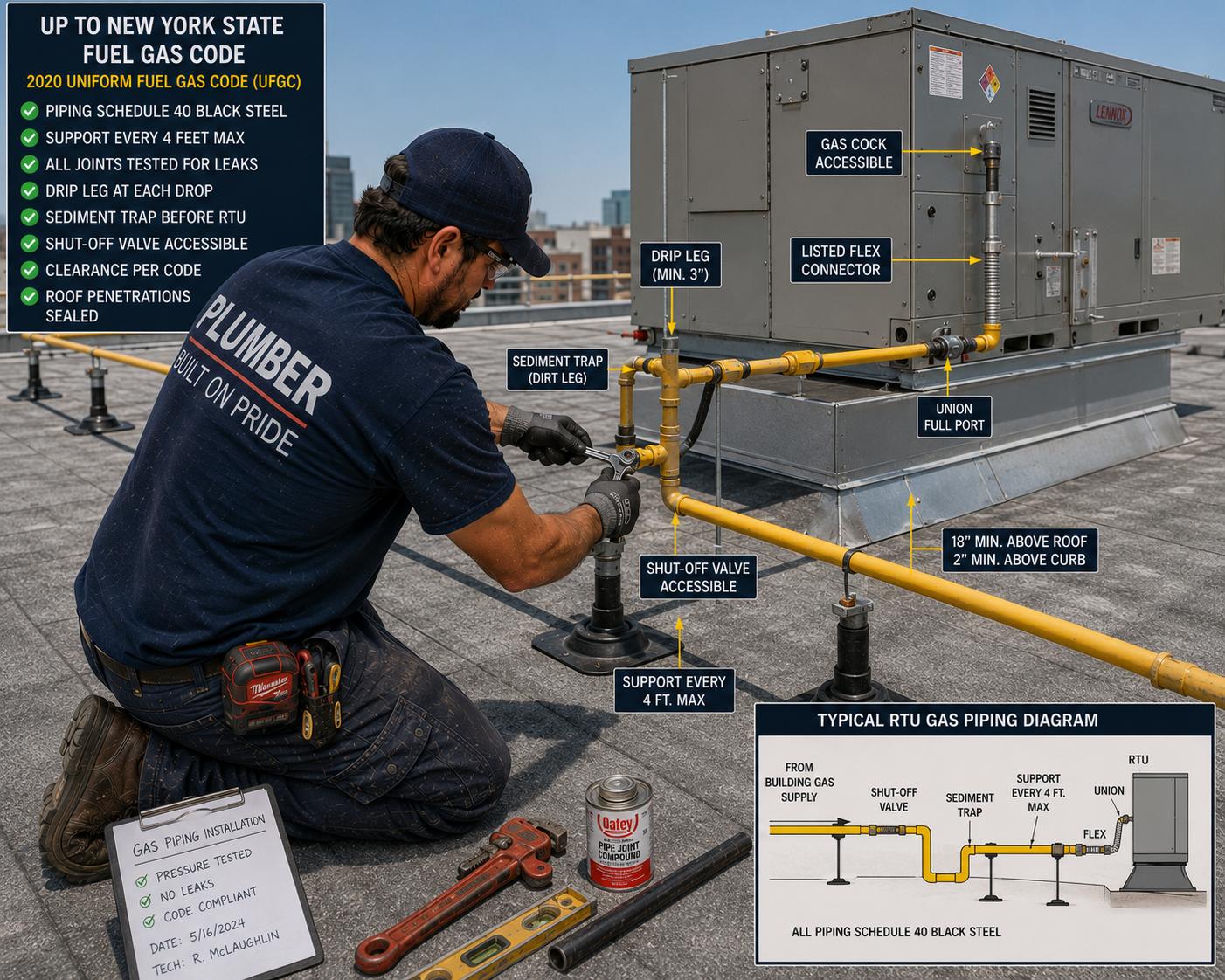
08 Module 8: NYS Fuel Gas Code training photo

8. New York State Residential Fuel Gas Code

Gas sizing, testing, venting.

Why This Topic Matters

Modern plumbers routinely install gas piping for water heaters, boilers, furnaces, fireplaces, generators, dryers, and cooking appliances. Safe gas installation saves lives.

Students will learn

  • Gas pipe sizing
  • Gas pressure
  • Pressure testing
  • Gas materials
  • Venting
  • Appliance connections
  • Combustion air
  • Fuel gas safety
  • Leak testing
  • Code requirements

Master Exam Focus: Gas pipe sizing calculations and appliance installation are major portions of the Master Plumber examination.

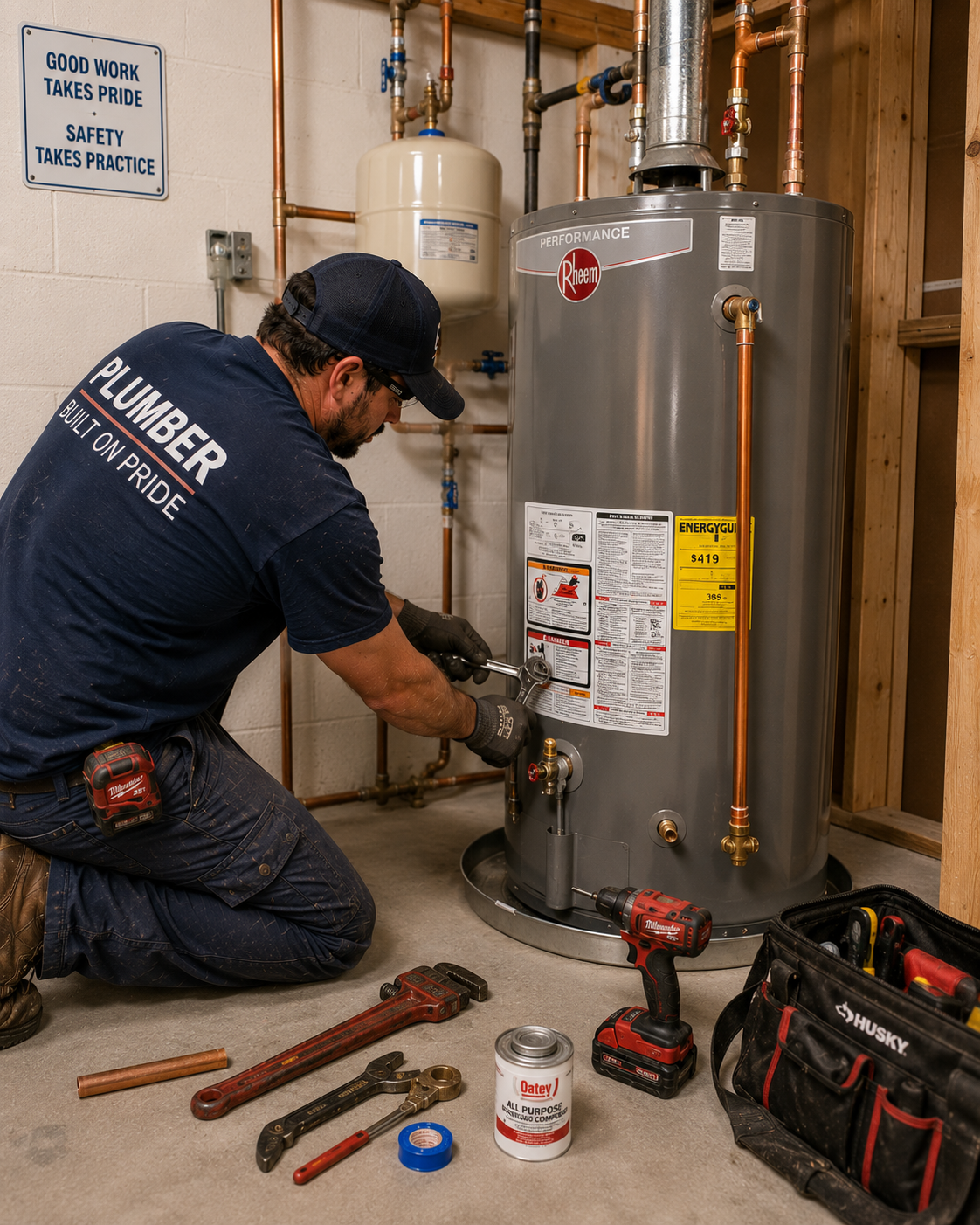
09 Module 9: Water Heaters training photo

9. Water Heaters

Tankless, heat pump, T&P relief.

Why This Topic Matters

Water heating systems combine plumbing, fuel gas, electrical, and safety requirements into one installation. Improper installation can result in explosions, scalding, or carbon monoxide hazards.

Students study

  • Storage water heaters
  • Tankless water heaters
  • Heat pump water heaters
  • Expansion tanks
  • Temperature and pressure relief valves
  • Drain pans
  • Combustion air
  • Venting
  • Water heater sizing
  • Efficiency requirements

Master Exam Focus: Safety devices, installation clearances, venting, and sizing are common licensing exam questions.

10 Module 10: Water Supply and Distribution training photo

10. Water Supply & Distribution

Service sizing, PRVs, arrestors.

Why This Topic Matters

A properly designed water supply system delivers safe, adequate water pressure and volume to every fixture while protecting the potable supply from contamination and damage.

Students will study

  • Water service sizing
  • Water distribution sizing
  • Pressure-reducing valves (PRVs)
  • Water hammer arrestors
  • Backflow prevention
  • Cross-connection control
  • Pipe materials
  • Hot and cold distribution
  • Fixture supply requirements
  • Code requirements

Master Exam Focus: Service and distribution sizing, PRV settings, and arrestor placement are frequently tested.

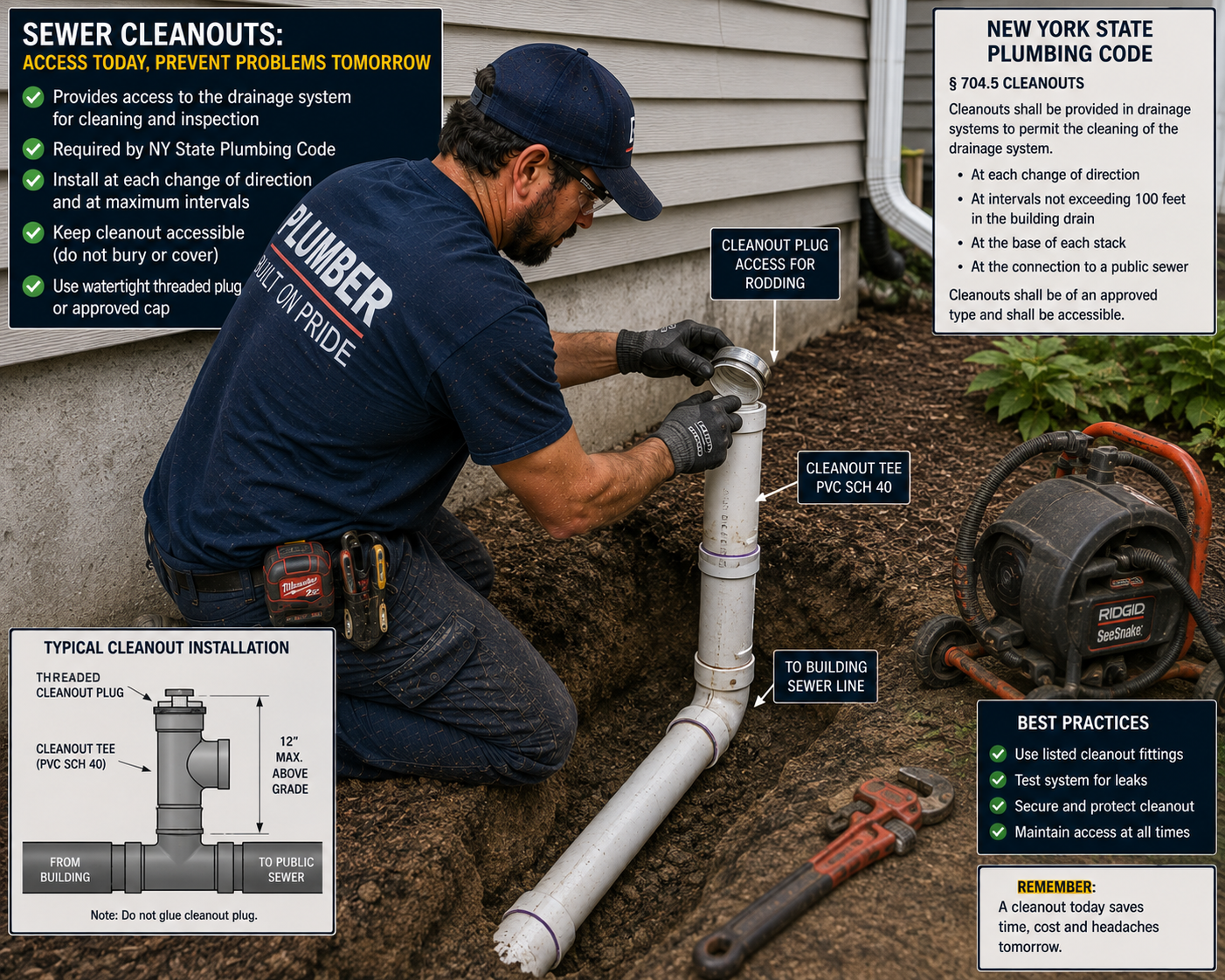
11 Module 11: Sanitary Drainage training photo

11. Sanitary Drainage

DFUs, slope, cleanouts.

Why This Topic Matters

A properly designed drainage system safely removes wastewater from buildings while preventing blockages, backups, and sewer gas exposure.

Students will master

  • Drainage fixture units
  • Building drains
  • Building sewers
  • Cleanouts
  • Horizontal drainage
  • Vertical drainage
  • Slope calculations
  • Pipe sizing
  • Drainage layouts
  • Code requirements

Master Exam Focus: Drainage sizing, slope requirements, and fixture unit calculations are among the most tested subjects.

12 Module 12: Indirect Special Waste training photo

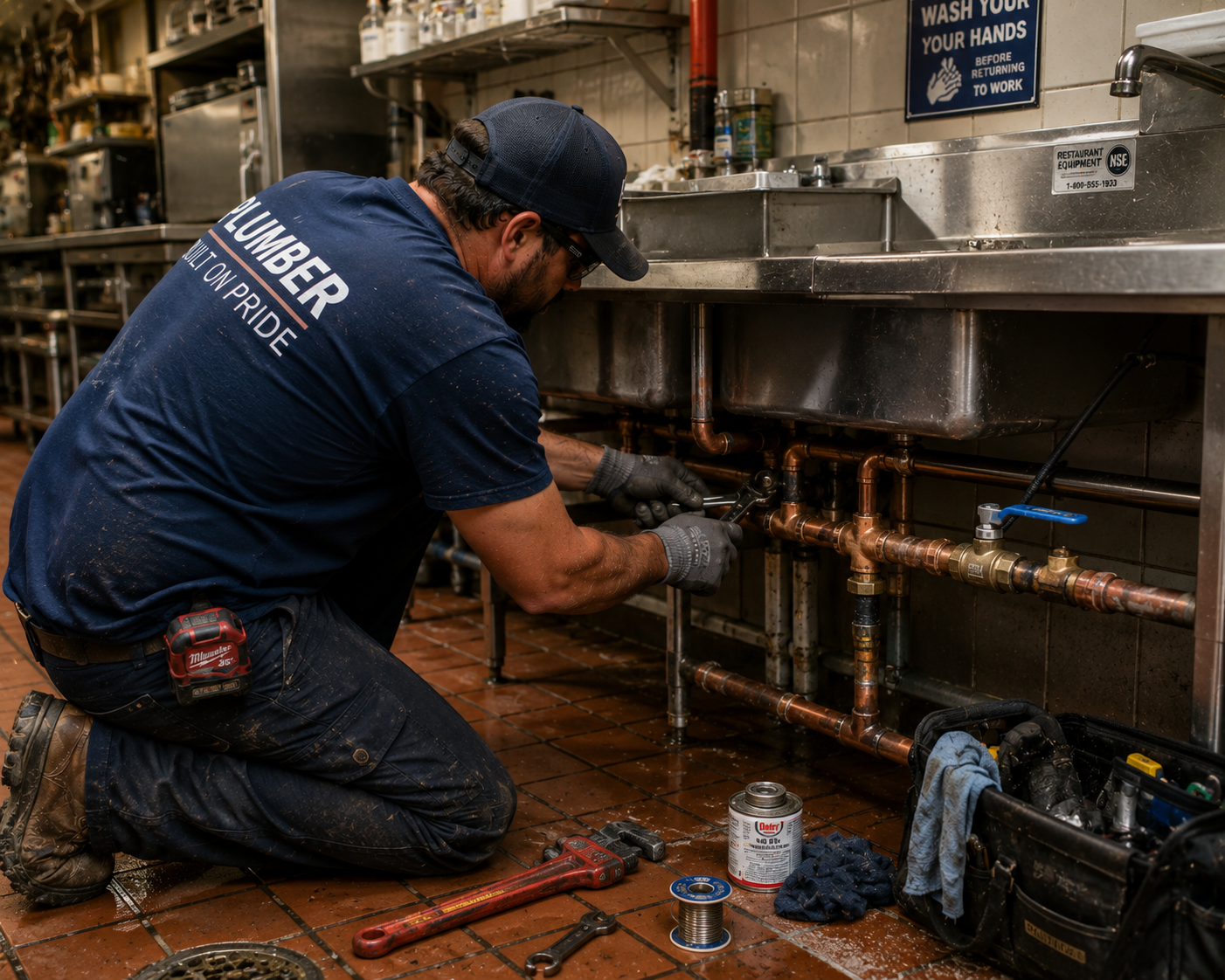
12. Indirect Special Waste

Air gaps, condensate.

Why This Topic Matters

Some waste systems cannot connect directly to the sanitary sewer because they may contaminate food or potable water systems. These systems require special protection.

Topics include

  • Air gaps
  • Indirect waste piping
  • Food service equipment
  • Medical equipment
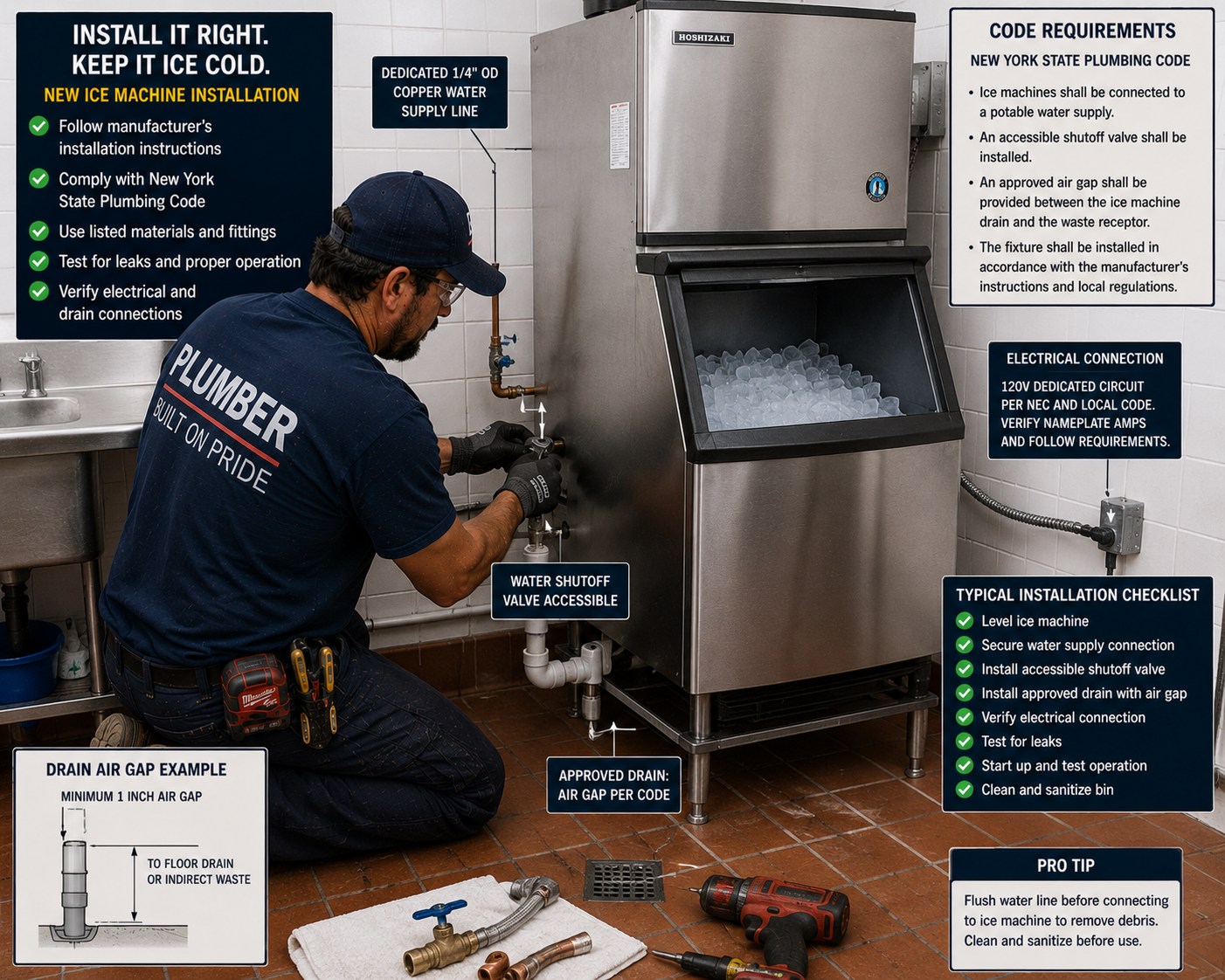
  • Ice machines
  • Commercial dishwashers
  • Condensate disposal
  • Laboratory waste
  • Special drainage requirements

Master Exam Focus: Air gap requirements and indirect waste installations frequently appear on licensing exams.

13 Module 13: Vents training photo

13. Vents

Wet, circuit, relief, island, AAVs.

Why This Topic Matters

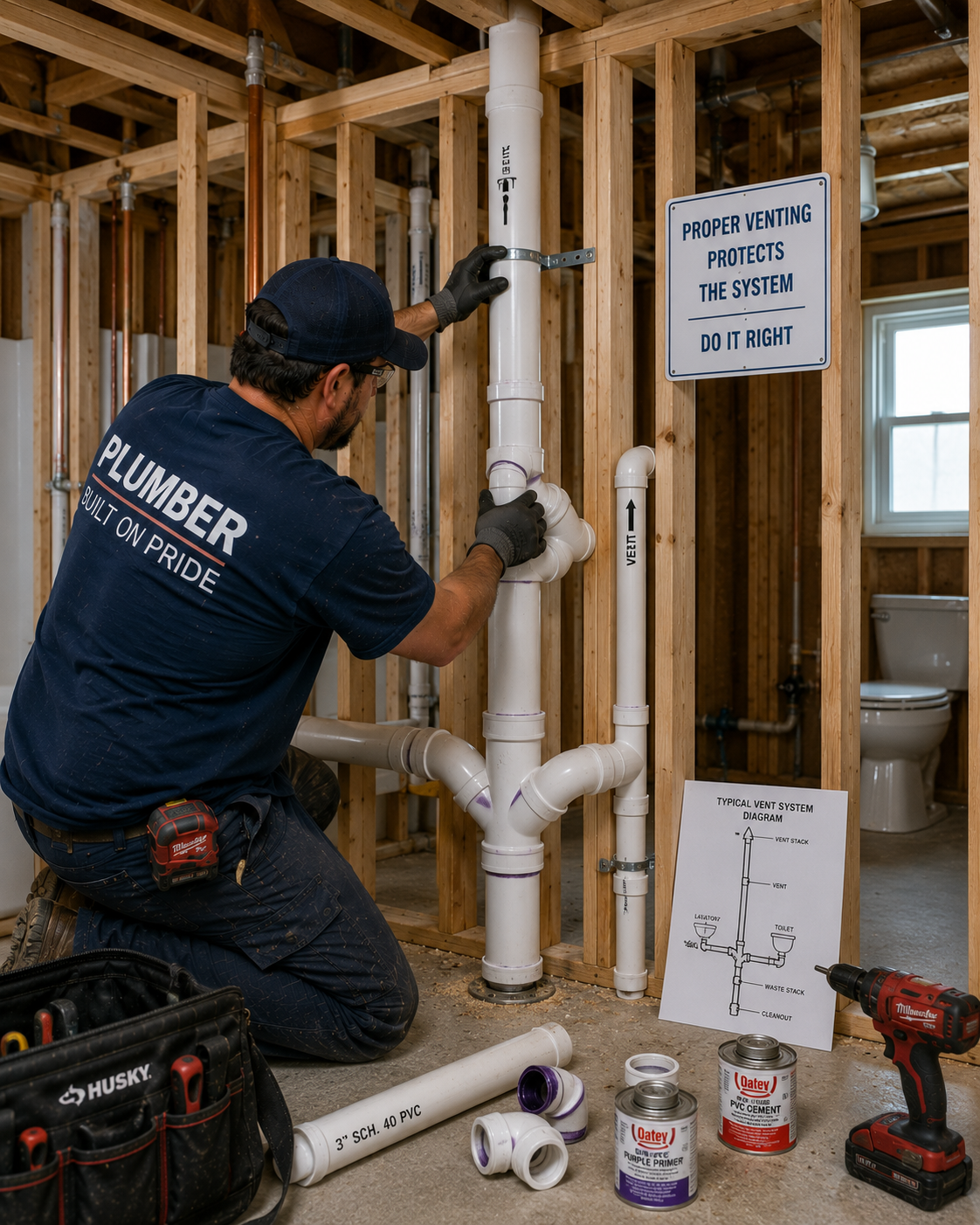
Venting is one of the most important concepts in plumbing. Proper vent systems protect trap seals, prevent siphonage, allow smooth drainage, and eliminate sewer gas hazards.

Students study

  • Individual vents
  • Common vents
  • Wet vents
  • Circuit vents
  • Relief vents
  • Vent sizing
  • Vent termination
  • Combination waste and vent systems
  • Island fixture venting
  • Air admittance valves (where permitted)

Master Exam Focus: Vent sizing and venting methods are heavily emphasized throughout the Master Plumber examination.

14 Module 14: Storm Drainage training photo

14. Storm Drainage

Roof drains, overflow, rainfall.

Why This Topic Matters

Storm water systems protect buildings from flooding and structural damage. Proper sizing prevents roof collapse, water intrusion, and property damage.

Students learn

  • Roof drains
  • Leaders
  • Conductors
  • Overflow drainage
  • Storm piping
  • Rainfall calculations
  • Roof sizing
  • Secondary drainage
  • Underground storm piping
  • Storm sewer connections

Master Exam Focus: Roof drainage sizing and rainfall calculations are common exam questions.

15 Module 15: NYS Residential Code training photo

15. New York State Residential Plumbing Code

Navigation, amendments, strategy.

Why This Topic Matters

This section brings together all plumbing systems into one comprehensive understanding of how residential plumbing is designed, installed, inspected, and maintained according to New York State law.

Students review

  • Complete residential plumbing requirements
  • Current New York State amendments
  • Code navigation
  • Residential installation standards
  • Inspection requirements
  • Code updates
  • Real-world code applications
  • Exam preparation strategies

Master Exam Focus: Students learn how to efficiently navigate the code book and apply multiple code sections to solve practical exam scenarios.

16 Module 16: Starting and Running Your Business training photo

16. Starting and Running Your Business

Licensing, contracts, growth, ethics.

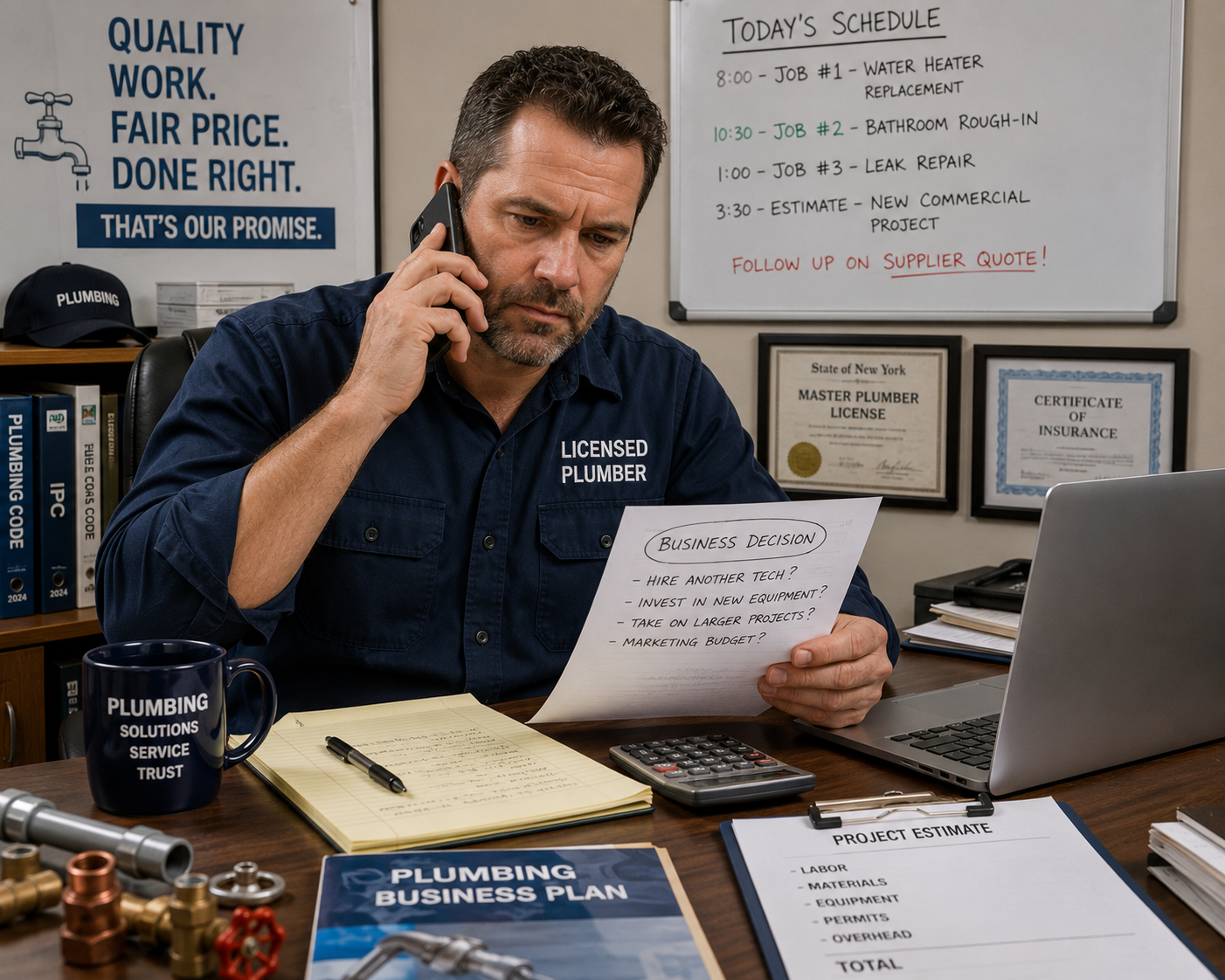
Why This Topic Matters

Becoming a Master Plumber is not only about passing the exam — it is about building a successful, ethical, and profitable business. Many licensed plumbers eventually own or manage their own companies, making business knowledge just as important as technical expertise.

Students will learn

  • Licensing and business registration requirements
  • Insurance and bonding
  • Estimating and bidding jobs
  • Reading contracts and specifications
  • Project scheduling
  • Hiring and supervising employees
  • OSHA safety requirements
  • Customer service and communication
  • Marketing and business growth
  • Financial management, bookkeeping, taxes, and cash flow
  • Risk management and legal responsibilities
  • Ethics and professional conduct

Master Exam Focus: Many licensing examinations include questions regarding contractor responsibilities, licensing laws, legal obligations, safety compliance, and business management.

What You Will Achieve

Course Outcome

Upon completion of this course, students will be able to:

Enroll Today

Ready to Earn Your Master Plumber License?

Copiague Campus

65 Elm Street
Copiague, NY 11726

Reserve Your Spot
Field Resource

Preparing for Your Plumbing License — Knowledge Is Power

Bookmark these municipal building department contacts, inspectors, and utility lines you’ll rely on as a licensed Master Plumber across Long Island.

Municipal Contacts & Inspectors

TownAddressMain PhoneInspectors & Chiefs
Hempstead1 Washington St, Hempstead, NY 11550(516) 538-8500Carmine Salute (Chief) (516) 812-3160; G. Wenk, J. Miotto, C. Kolansky, J. Ruzicka, M. Baloglou
N. Hempstead210 Plandome Rd, Manhasset, NY 11030(516) 869-7679William Smalley (Chief) (516) 869-7671; D. Frissora, F. Evangelista, J. DeLucia, D. Richards, M. Pilo
Oyster Bay74 Audrey Ave, Oyster Bay, NY 11771(516) 624-6200Elizabeth Maccarone (Comm.); V. Rella, J. Barnett, M. Bathie, D. Mercado, J. Pepper
Babylon200 E. Sunrise Hwy, Lindenhurst, NY 11757(631) 957-3058Thomas Young (Comm.); Tim Besemer, Vincent Biondo (631) 957-3021
Brookhaven1 Independence Hill, Farmingville, NY 11738(631) 451-6333Tullio Bertoli (Comm.); B. Triebs, T. Lagnese, C. Kalivas, R. Primus
Huntington100 Main St, Huntington, NY 11743(631) 351-2825Steve Kiewra (Permits) (631) 351-2821; Jonathan Lombardo (631) 351-3143
Islip1 Manitton Ct, Islip, NY 11751(631) 224-5470Ron Meyer (Comm.); John P., Sebastian LaMonica (631) 595-3756
Riverhead201 Howell Ave, Riverhead, NY 11901(631) 727-3000Brad Hammon (Senior) Ext. 265; Mark Griffin Ext. 275, Michael Inghingolo Ext. 231
Shelter Island38 N. Ferry Rd, Shelter Island, NY 11964(631) 749-0772Lori Beard Raymond Ext. 2106; J. Chris Tehan, Reed Karen
Smithtown99 W. Main St, Smithtown, NY 11787(631) 360-7520William White (Dir.); L. D'Agostino, B. Polovchena, A. Richards, J. Lorefice

National Grid Contacts

Emergency1-800-490-0045
or dial 911
New Gas Service1-877-696-4743
Meter Relocation1-800-930-5003
Meter Set Appointments1-877-597-0426
Long Island NY Natural Gas | Business | National Grid

TRI-TOWN PLUMBING LICENSE AGREEMENT

The Tri-Town Plumbing License Agreement, a reciprocal ordinance governing the licensing of plumbers in the three towns of Nassau County, has been in effect since 1969. Key figures in the signing of this ordinance were: Hempstead Town Supervisor Frances T. Purcell, North Hempstead Town Supervisor Robert Meade, Hempstead Town Presiding Supervisor Ralph G. Caso, Oyster Bay Town Supervisor Michael N. Petito, Nassau County Association of Plumbing & Heating & Cooling Contractors President James Lorenzo, and Harold Krainin, Counsel to the Association.

Many municipalities have indicated a desire to join and are presently participants of the Tri-Town Licensing Agreement. Among them are Bayville, Brookville, East Rockaway, Farmingdale, Freeport, Floral Park, Great Neck Estates, Village of Hempstead, Hewlett Harbor, Hewlett Neck, Lynbrook, Mineola, New Hyde Park, Old Westbury, and Sea Cliff.

Request Info
Enroll Now